Hello!
My name is Dan Opie and I am an A2 Media Studies student at Aldenham School. Welcome to my Media Studies A2 Music Video Blog. Over the next few months I will be using this blog to post my media coursework over the A2 course. Please feel free to use the navigation bar to browse through the various posts I put up regarding research I have found on music videos and near the end my own music video aswell as an evaluation of this end piece. Thanks for looking and I hope you enjoy my blog!
Jonas Åkerlund is a Swedish music video director, he has a memorable style of music video which often mocks forms of movie trailers and short films. Åkerlund was a member of the Swedish black metal band Bathory from 1983 to 1984. He then directed his first ever music video: "Bewitched" by Candlemass.
He is now most famous for collaborating with Madonna, directing many of her most famous music videos.
Best known videos directed by Åkerlund:
Roxette - "Run To You" (1994)
Roxette - "Vulnerable" (1995)
Madonna
- "Ray of Light" (1998)
Metallica - "Turn The Page" (1998)
Metallica - "Whiskey in the Jar" (1999)
Madonna - "Music" (2000)
Ozzy Osbourne - "Gets Me Through" (2001)
U2 - "Walk On" (2001)
Christina Aguilera - "Beautiful" (2002)
Maroon 5 - "Wake Up Call" (2007) *37 million
P!nk - "Sober" (2008) *76 million
Lady Gaga - "Paparazzi" (2009) *118 million
David Guetta feat. Kelly Rowland - "When Love Takes Over" (2009) *86
Jake Nava is an English music video director, Born in North London. He is also well known for his TV commercial directing. Nava gained his film degree at the University Of Westminster. He has won many awards for his work including: Winning music video of the year with Beyoncé's Single Ladies, Placed fifth in Entertainment Weekly's Top 10 Music Video Directors list, and many more.
Nava will most often work with Beyoncé and he has directed music videos to some of her most famous songs.
Best known videos directed by Nava:
Spice Girls - “Holler” (2000)
The Rolling Stones - “Streets Of Love" (2005)
Kylie Minogue - “Red Blooded Woman" (2003)
Leona Lewis “Run" (2008)
Adele “Someone Like You” (2011) *396 million
System Of A Down "B.Y.O.B." (2005)
Mariah Carey “Shake It Off" (2005)
Kelis “Milkshake” (2003)
Usher “Burn” (2004) *68 million
Shakira “She Wolf” (2009) *111 million
Britney Spears “My Prerogative” (2004)
Beyoncé "If I Were A Boy" (2008) *144 million
Beyoncé feat. Jay-Z “Crazy In Love” (2003) *122 million
Beyoncé "Single Ladies (Put a Ring on It)" (2008) *322 million
Born - April 18, 1973 (age 41)
Years Active - 1998 - Present
Anthony Mandler is an American film director, television commercial director and professional photographer. He is also particularly well known for his music video directing. His most frequent collaborator on music videos is Rihanna.
Best known videos directed by Mandler:
Black Eyed Peas feat. Chali 2na — "Get Original" (2001)
Snoop Dogg — "Ups & Downs/Bang Out" (2005)
50 Cent — "Hustler's Ambition" (2005)
Eminem — "When I'm Gone" (2005) *240 million
Rihanna — "Unfaithful" (2006) *192 million
Fergie — "Big Girls Don't Cry" (2007)
Rihanna feat. Ne-Yo — "Hate That I Love You" (2007) *120 million
Rihanna — "Don't Stop The Music (2007) *213 million
Akon — "Right Now (Na Na Na)" (2008)
Drake feat. Lil Wayne — "Miss Me" (2010)
Nicki Minaj — "Starships" (2012) *206 million
Justin Bieber feat. Big Sean — "As Long as You Love Me" (2012) *213 million
Rihanna — "Diamonds" (2012) *475 million
Taylor Swift — "22" (2013)
Shakira — "Dare (La La La)" (2014) (FIFA World Cup Song)
The following posts rank the 5 best music videos ever made in order:
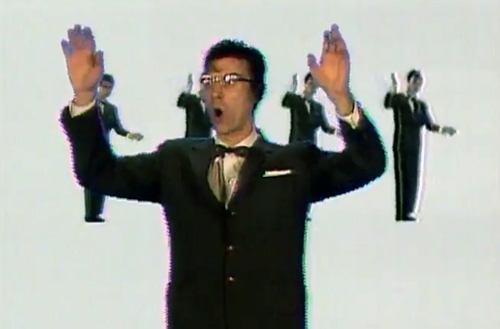
5. Talking Heads - Once in a Lifetime (1980)
Artist - Talking Heads
Director - David Byrne
Producer - Brian Eno
The music video features a bespectacled David Byrne dancing much like a marionette. Byrne is shown making sudden flings of his arm, tapping his head, and getting on his hands and knees to pat the floor, much like simple tricks which can be done with actual marionettes. In the background, clones of Byrne dance in perfect synchronization; in the foreground, a larger Byrne is getting further and further out of synchrony.
he music video is the most iconic for a band that was never commercially successful or had huge radio hits. But when MTV debuted a year after its 1980 release, “Once in a Lifetime” became one of its most rotated and popular clips, giving many music fans their first look at Byrne’s brilliant bizarreness.
The video is exhibited in the New York Museum of Modern Art. Some of Byrne's mannerisms (such as physical spasms, unfocused eye movements, and sharp intakes of breath) were inspired by his choreographer, Toni Basil, showing him footage of epilepsy sufferers.[5]
The video also made an appearance on an episode of the 90s Beavis and Butthead.
Artist - a-ha
Director - Steve Barron
Producer - Simon Fields
The first release of "Take On Me" in 1984 includes a completely different recording, and was featured in the first video, which shows the band singing with a blue background. The second video was directed by Steve Barron, and filmed at Kim's Café (now called " Savoy " cafe )and on a sound stage in London, in 1985. The video used a pencil-sketch animation / live-action combination called rotoscoping, in which the live-action footage is traced-over frame by frame to give the characters realistic movements. Approximately 3,000 frames were rotoscoped, which took 16 weeks to complete
The video's main theme is a romantic fantasy narrative. It features one of the band members in a comic inviting a girl into the story where they are chased by men. The girl is allowed to escape the comic but misses her cartoon friend. He manages to escape by banging on the sides of the comic until he falls into reality.
Artist - Björk
Director - Chris Cunningham
Producer - Björk, Howie B
The music video was directed by Chris Cunningham and featured two intimate robots.
The video won multiple awards, including two MTV Video Music Awards for Breakthrough Video and Best Special Effects. It was also nominated for a Grammy for Best Short Form Music Video (it lost to Korn's "Freak on a Leash"). It is on permanent exhibition at the Museum of Modern Art in New York. The video also placed in "MTV2's 100 Best Videos Ever" coming in at number 1.
The video starts with a robotic Björk lying on a white platform in
the center of a sterile room being assembled or repaired by mechanical
arms in what appears to be a clinic for robots. Even before finishing
the assembly, the first Björk robot meets another Björk robot, who joins
in the song with her. They start to kiss passionately as machines work
on assembling electronics in their backs.
According to the website of Glassworks, the company which did the special effects for Cunningham, SOFTIMAGE and Flame software were used for 3D elements and 2D compositing, respectively.
Contrary to appearances, the two robots in the film were non-working models. When the film I, Robot
screened in 2004, some people found the robot design in that movie to
be similar to the design of the robots in the video directed by
Cunningham — he has not commented.
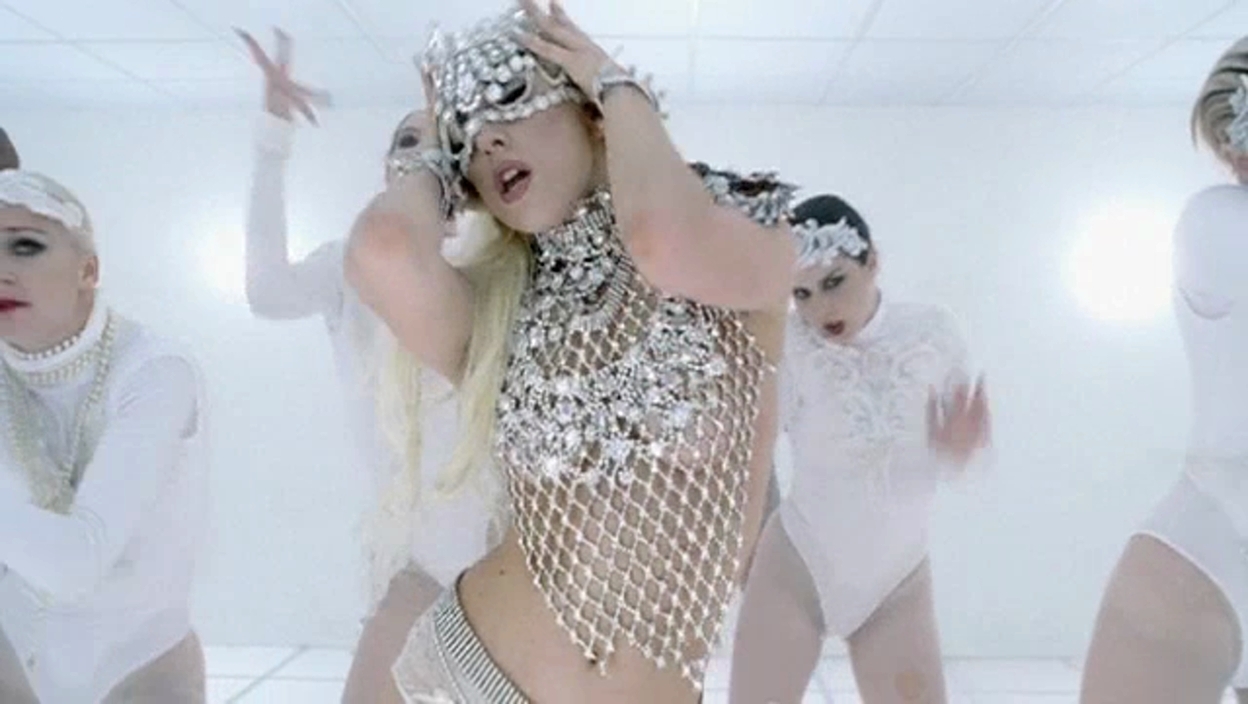
Artist - Lady Gaga
Director - Francis Lawrence
Producer - RedOne, Lady Gaga
During an interview with Rolling Stone, Gaga confirmed that film director Francis Lawrence had directed the music video for "Bad Romance" and that she was impressed with the final version.She explained
"I wanted somebody with a tremendous understanding of how to make a pop
video, because my biggest challenge working with directors is that I am
the director and I write the treatments and I get the fashion and I
decide what it's about and it's very hard to find directors that will
relinquish any sort of input from the artist. ... But Francis and I
worked together. ... It was collaborative. He's a really pop video
director and a filmmaker. He did I Am Legend and I'm a huge Will Smith
fan, so I knew he could execute the video in a way that I could give
him all my weirdest, most psychotic ideas ... But it would come across
to and be relevant to the public."
The main idea behind the video is that of Gaga getting kidnapped by a
group of supermodels who drug her and then sell her off to the Russian mafia for a million rubles. It takes place in a fluorescent white bathhouse.
In 2011, "Bad Romance" was voted the best video of the 2000s by readers of Billboard, narrowly beating Britney Spear's "Toxic". Time magazine also included "Bad Romance" on its list of best music videos since the 1980s. The video and its choreography also drew many comparisons with the music video of Michael Jackson's Thriller, both having robotic, zombie-like arm movements and morbid themes.
Artist - Michael Jackson
Director - John Landis
Producer - George Folsey
Michael Jackson's Thriller is an American 13-minute music video for the song of the same name released on December 2, 1983. It was directed by John Landis, who also co-wrote the screenplay with Michael Jackson.
It was MTV's first world premiere video. Voted as the most influential pop music video of all time, Thriller proved to have a profound effect on popular culture, and was named "a watershed moment for the [music] industry" for its unprecedented merging of film making and music. Guinness World Records listed it in 2006 as the "most successful music video", selling over nine million copies. In 2009, the video was inducted into the National Film Registry by the Library of Congress, the first music video to ever receive this honor, for being “culturally, historically or aesthetically” significant. The track was also listed at number one on "The Top 10 Halloween Songs" by Billboard.
Costarring with Jackson was former Playboy centerfold Ola Ray.
The video was choreographed by Michael Peters (who had worked with the singer on his prior hit "Beat It"), and Michael Jackson. The video also contains incidental music by film music composer Elmer Bernstein, who had previously worked with Landis on An American Werewolf in London. The video (like the song) contains a spoken word performance by horror film veteran Vincent Price. Rick Baker assisted in prosthetics and makeup for the production. "Thriller" was the third and final video for the Thriller album. The red jacket that Jackson wore was designed by John Landis' wife Deborah Landis to make him appear more "virile". Wikipedia - Michael Jackson Thriller
A concept music video is based around a single unique idea and attraction. The concept in the video is usually very obscure and unusual, it is very hard to film (often requiring special effects) and are also quite unrelate-able for any audience watching. This is why only a few music videos are purely concept without any other use of narrative or performance. However in the same way a concept music video can create a buzz and attract viewers with the unusual video. It will keep the audience constantly entertained and watching each and every scene with fascination if done right.
One concept only music video which was quite controversial is "Rubber Johnny" by Chris Cunningham (A renowned music video director) + Aphex Twin - 2005:
Another more recent and popular example of a concept video is Lady Gaga's "Applause" - 2013:
In general a music video will often have aspects of each video type: performance, narrative and concept within their own works. This is so they can gain all the benefits of each one and maximise viewing pleasure.
A good example of this is Macklemore & Ryan Lewis "Thrift Shop" - 2012. This music video has a story to it of Macklemore wanting to find bargains at thrift shops and his pursuits to find these bargains. It has a performance base of Macklemore and Ryan Lewis each performing the song live in front of the camera. And it has a concept base due to the unusual scenes that the music video features including people dancing in the thrift shop and scenes of people riding in shopping carts.
A narrative based music video will almost always have a story line in the video. This is a great type to use as it engages the audience effectively through the concept of story telling and drama. It will typically relate to the lyrics and genre of the song and the artist will hope this will allow the audience to connect and relate better to the actual song as it is easier to find the meaning when a visual example is provided.
A good example of a narrative video is David Guetta's Lovers on the Sun - 2014, it is western themed electronic dance music and therefor has a western related music video:
Another great example of a narrative based video is Nickelback's Lullaby - 2011, this is an interesting music video since it has a narrative story line as well as being a performance video:
There are three different possible types of music video's: performance, narrative and conceptual. A band or artist will choose a music video type to help convey their message across to the fans and to fit in with typical genre stereotypes.
Performance based music videos feature the artist or band performing their/his/her song to the camera or an audience as the main attraction in the video. They are usually quite cheap and easy to make (especially on a budget) as music videos to film due to no actors, special locations, props or effects being needed. It is a commonly used technique by rock bands and girl/boy bands, this is due to the fans typically wanting to see the group perform to feel like they are at the bands live concert. Music videos that are performance based tend to be high energy and fast paced.
An example of a performance based music video is Ariana Grande's Problem - 2014
Music videos ignore common narrative as they are essentially advertisements. As consumers, we make up our own meaning of a song in our minds: a music video can anchor meaning and gives the record company/artist a method of anchoring meaning
- Andrew Goodwin
Andrew Goodwin is a media theorist who famously published a guide of how to analyse a music video in his book 'Dancing in the Distraction Factory' 1992.
Goodwin's observations from many years of analysing music videos will be explained in detail through a PowerPoint in the next post.
A music video is a short film clip used to accompany music with visual
media. Using a music video is beneficial to artists in many ways. It can
act as a promotion or advertising tool which can help raise sales of the
actual song itself, it can also allow an artist to help communicate the
message or artistic expression of their song through other means to the
listener which may have been harder to achieve through just the original tune or
lyrics.
Below is a typical modern music video called Roar by Katy Perry:
Music videos first became popular and regularly associated as a typical production process of releasing a new song in the 1980's. This was due to the rise of music being played on TV for entertainment, A popular channel still today is MTV and back in the 1980's they decided it would be a good idea to accompany the song with a film clip that would keep listeners interested and keep them on their channel instead of reverting back to radio. From there the music video was officially introduced as mainstream tradition with a new song.
The first recognised music video was actually not introduced on MTV. It was in fact a famous song by Elvis Presley called Jailhouse Rock. Due to this song being released in 1957 there was no real need for a music video as there were few televisions owned by households. Therefor this video all though popular now was considered a pointless exercise back in the 1950's. It was only until televisions became readily available to most households that music videos became so popular.
Genres of Music videos are hugely diversed since the mainstream use of them in the 1980's. Now every genre of music can use a music video to there advantage. This includes:
Pop
Rock
RnB
Dance
Electronic/House Music
Country
Indie
K-pop (Korean/Asian Pop)
Rap etc.
In terms of the actual style of music video used by the artist in their specific music genre it varies hugely and does not always relate with the music genre, lyric or even message of the song all though typically it does so that listeners can use the video to help them understand the songs meaning. The styles vary greatly and use unique and different filming techniques and content. The content can be anything from a dramatic story relating to the song, documentaries, animation or even just live versions of the artist performing that particular song.